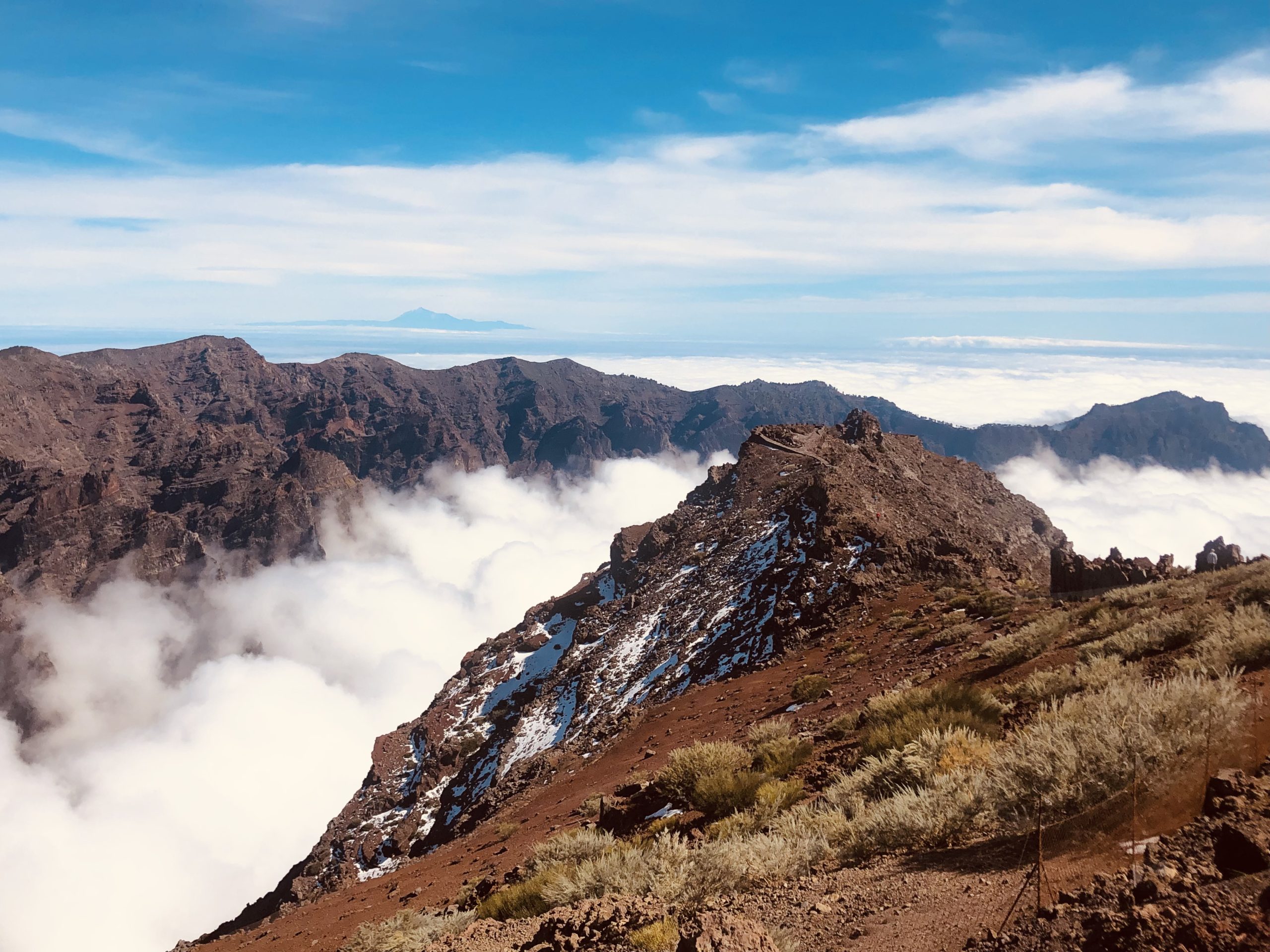
The life of a blogger is made up of come and go, ‘ida y vuelta,’ going back and forth. The life of a blogger is made up of come and go, Ida, y vuelta, going back and forth.
And I learned the hard way that it’s only by going that you can come back with something to say. So, here I am, back from a long trip.
From Island to Island
I worked in the Canary Islands for six months. They have been intense, necessary months that I wouldn’t trade for anything in the world (if you haven’t read it yet, you can find my Canarian diary here).
Like every wonderful experience that happens in our lives, however, it had an influential, indispensable, but limited time. In 6 months, I have taken a lot, learned even more, and put it into practice forever. It’s not bad in an overall concentrated time frame, especially considering the slow and cyclical trend in which you stumble and get back up again according to the rhythm of the tides.
So, two months. What have I done in this time? , I traveled. I picked up my backpack and set off again, driven by the desire to collect as much sand, stones, colors, scents, flavors, people, tools, and treasure maps as possible.
Urgency, my faithful friend who never abandons me, the humus that pushes me to live in the moment, to be in the present time, so as not to risk regretting even a single minute that we are allowed on this planet, has returned to grab me. So, pack your backpack, and off we go.
Two months traveling, three stages, three small bites of life: Malta, a crossroads of cultures to be explored bite by bite; Valencia, tastes of a future that speaks Latin; Lisbon/Évora, a place of the soul from which to start again with a new flavor.
Malta
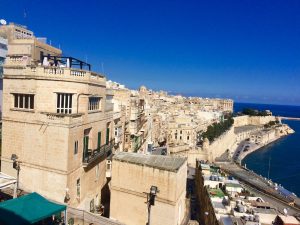
Cream and blue. The colors of the buildings and houses, the colors of the sea. This is what comes to mind when I think of Malta.
Thanks to the spectacular weather I found in October, Malta surprised me with its kaleidoscopic tranquility. It is an enchanting, beautiful place, illuminated by the sun and the brightness of its inhabitants. A place rich in different cultures, full of stories that tie knots with distant moments in the history of humanity (the one with a capital S), and which are found in the faces of the people I met in the port of Msida, in the capital Valletta and in ancient city Mdina.
Roman, Spanish, English, and French are just some of the cultures that have lived on the small island (and in the main islands that together make up the Maltese Archipelago, such as Gozo and Comino), which, being in the center of the Mediterranean, has been for years the landing point of many immigrants from Algeria, Tunisia, Egypt, Cyprus, Greece and the Ionian Italian islands as well as from Lampedusa and Sicily.
About Italians. Malta is full of activities, bars, and Italian restaurants, especially in the port area that leads from Msida to Valletta. Smiles, lively eyes, and nightlife – which winds through the neighborhoods of Paceville and St. Julian’s – will take you straight to the beating heart of an island rich in culture and to be discovered corner after corner.
I have only visited some of the most evocative views of Malta, and for this reason, I promised myself to return soon to collect material and stories to tell… It’s a dirty job, but someone has to do it. Stay tuned.
Valencia
I went to Valencia as a pre-discovery. To study a little the environment in which I would like to live for a while. Spain and Spanish are new realities for me, who have always cherished Anglo-Saxon culture. And so it happens that if your mind doesn’t press the right switch, you find yourself a little fish out of water for a moment. Funny when in Malta, now accustomed to flip-flops and the calmness of the Canarian people, I spoke in Spanish to people who looked at me curiously, responded in English, and kindly asked me to move on… a 2017 remake of Renato Pozzetto’s ‘Country Boy,’ in order to understand each other.
Valencia, therefore. I traveled mainly on foot, staying in a structure in the city center managed by Italians.
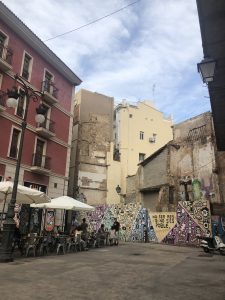
Thinking of Valencia, I think of the simplicity, of the movements, of finding oneself. But I also think of the complexity of avant-garde architectural structures, created by the best architects in the world at the service of citizens and tourists who year after year increasingly discover this beautiful city, large but on a human scale, economical and at the same time full of cultural events. And finally, of the richness of its culture, which reverberates in the Central Market, the local market par excellence. In the historic building from 1900, embellished with beautiful azulejos, the tiles that visually unite Spain, the Canary Islands, Portugal, and also the countries of North Africa, first of all, Morocco, you will be able to taste all the gastronomic delicacies that this city gave us.
Food, obviously, never goes unnoticed for us Italians! Paella, first of all, right here of all Spanish cities, was born in the 15th and 16th centuries as a shepherd’s main dish that was easy to transport. Tapas combined dishes that make pinching and nibbling between delicious cheeses, chorizo, various cured meats, and jamons of all kinds pleasant. Patata bravas, a typical Spanish dish made of potatoes that are first boiled and then fried, accompanied by a spicy sauce called ‘brava.’ La Albufera de Valencia, or a stew made with potatoes, paprika, garlic, and eel, served as a fish soup. Last but not least, the horchata and fartons combo: the first is a very sweet drink based on chufa (cyperus in Italian), a tuber that grows only in soils with particular properties and which, for this reason, has gained the designation of origin; the latter are biscuits with an elongated shape and covered with icing, similar to our ladyfingers also in terms of the ingredients (00 flour, eggs, sugar). In short, like a good Italian, in Valencia, I drank and ate!
Lisbon/Évora
The journey that takes me first to Lisbon and then to Évora is an extraordinary journey, one that can change the perception of your world.
Portugal was a completely unknown territory for me. Of those you imagine in color or of which you evoke some particulars and little more. I set foot there, I look out the window of the bus, I look up.
One word: Enchantment.
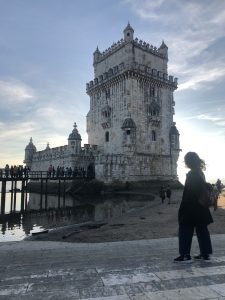
First, Lisbon and then Évora were a pleasant discovery and a moment of uncontaminated joy. The November sky shone with a blue never seen before, the streets of Lisbon were full of colors, suggestions, and micro-inputs to collect and put aside, and the narrow streets of Évora climbed up the impertinent and challenging hills, also thanks to the cobblestones a little lopsided that you had to be careful stepping on.
Again, a ray of light and colors filled your eyes so much that you couldn’t help but smile: the azulejos, the hand-painted ceramics, the clothes and accessories decorated and worked entirely in cork (cork is a typical Portuguese material, a significant global business which here is called ‘green gold’) and the usual souvenir shops where you can find a bit of everything at a low price, including the Barcelos rooster, (galo de Barcelos in the language), a typical figure of the Portuguese folklore. I will tell you about Évora in the next post because it is a place where I walked a particular 10-day journey and which I want to share with you. But let’s go back to the rooster for a moment.
Travel souvenirs
The story of the Rooster of Barcelos struck me particularly. He comes from the city of Barcelos in northern Portugal, where legend tells of a poor pilgrim who, returning from Santiago de Compostela, was accused of stealing silver from a local owner. Cornered in front of the judge, who was having lunch with a roast cockerel, the pilgrim confidently proclaimed his innocence, just as he was sure that the cock in the judge’s plate would get up and run away. The judge obviously didn’t believe him.
Yet, at the very moment of his hanging, the rooster stood up and began to crow. Rushing to the place of condemnation, the judge found the pilgrim still alive, ready to be saved.
I like this story, which is like the story of us travelers. We are always pilgrims on the move, trampling on places and territories that are not ours, grabbing pieces of life here and there with everything we have on our plate: photos, stories, bracelets, images, people met for a brief moment, glimpses of life that we would like to bring to home with us.
But the thing I like most about this legend is the fervent confidence of the pilgrim, convinced that his faith would save him. And I’m not talking about religious belief, but the spirit of those who know they are following their own path. Far from conditioning, impervious to judgments, deaf to ‘No,’ to those who say that ‘it’s impossible,’ blind to the image of himself that tells of his past.
Free to be what he wants. Free to love yourself. Free to live.